I Tested The Ghost Hunting Apps. Here’s What They Actually Measure.
Nadia runs the popular EMF and spirit box phone apps against what they actually claim to detect, after reading a forum post about one giving someone an answer they'd been waiting years for.
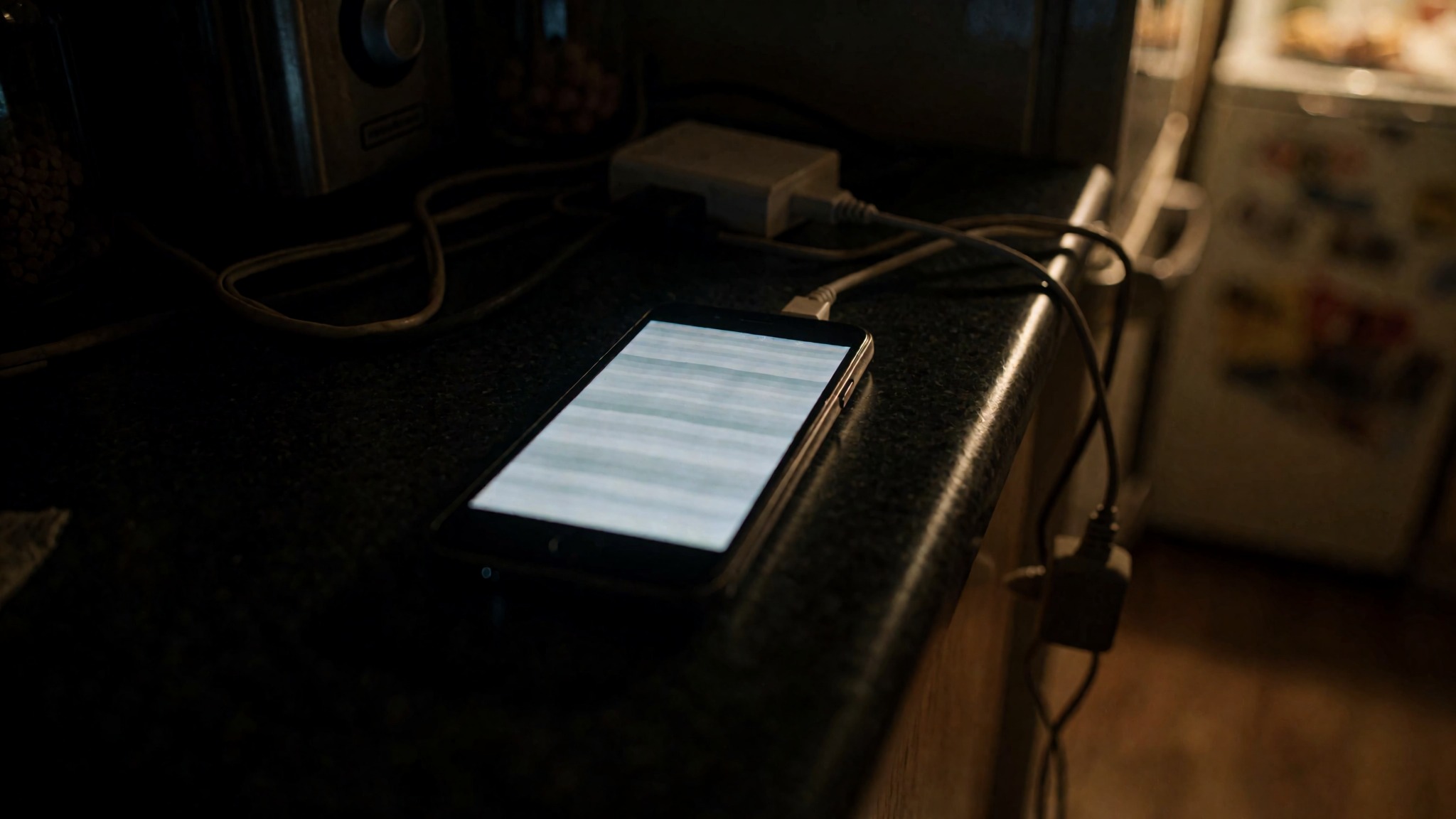
Right, so here’s what we know. I came across a post a few weeks back on a paranormal forum, the poster not named because that’s not mine to do, describing a night with a spirit box app. They’d asked for a name out loud and the app spoke one back straight away, a name that matched someone they’d lost. They’d written it up as the clearest answer they’d ever had from anything. I’ve read dozens of posts built the same way, so I decided to find out properly what these apps are doing when that happens. I ran the popular EMF and spirit box apps against what they actually claim to detect, in my own flat first and then on an actual job, and the gap between the app store description and the mechanics underneath is bigger than most people realise.
What the EMF apps are actually reading
A proper EMF meter, the kind investigators have carried for decades, reads electromagnetic field strength across a range of frequencies and gives you a number in milligauss. A phone does not have one of those built in. What it has is a magnetometer, the same sensor that points your compass app north, and that’s what most of these apps are quietly repurposing. It’s a three-axis magnetometer built to detect the Earth’s magnetic field, not calibrated to detect anything else, and it was never designed for this job.
I tested one of the better-known EMF apps by walking it slowly round my own kitchen. The bars spiked, reliably, next to the fridge, next to the laptop charger, and right over the extension lead behind the sofa. Every spike had a wire or a magnet behind it. None of that’s mysterious, it’s exactly what a magnetometer is built to do near household electrics, and it’s exactly why old buildings with old, unearthed wiring throw these readings constantly. A spike near a Victorian fuse box isn’t evidence of a presence. It’s evidence of a Victorian fuse box.
If you genuinely want to measure a room properly, something that runs all night and gives you a continuous graph tells you far more than a phone app ever will, because a real cold spot shows up as a dip you can trace, a draught, a window seal, condensation. A phone telling you the “energy” went up for four seconds tells you nothing at all, because you’ve got no baseline to compare it to.
What the spirit box apps are actually saying
The original spirit box, sometimes called an ITC device, sweeps rapidly across AM or FM radio frequencies, producing short bursts of static, music fragments and talk radio snippets. People listening to that fast, broken audio hear words in it because our brains are built to find language in noise, the same reason you can hear a voice in a running tap if you decide to listen for one. That’s a real, well documented effect called apophenia. It isn’t a flaw in the listener, it’s just how hearing works.
The phone app version is a different animal. Most of them don’t have a radio receiver at all, and if you check the permissions an app asks for, that’s usually confirmed: no radio antenna access, because there isn’t one to access. Instead, the app plays a looped sweep of white noise or recorded static and triggers words from a stored bank, sometimes genuinely at random, sometimes keyed to a timer. I ran one of the most popular spirit box apps in a silent room on my own for forty minutes and wrote down every word it gave me without asking it a single question. Several of them still felt like near-perfect answers to things I’d been thinking about ten minutes earlier, because that’s exactly what a reasonably sized word bank does when a person is primed to find meaning in it. It isn’t talking to you. It’s doing what a word bank does.
That’s what I think happened to the person on that forum post too. They asked a question out loud, held the name in their head while they waited, and the app gave them a word from its bank that was close enough to feel chosen. I’m not calling them a liar, or daft. I’d have felt exactly the same thing standing in their shoes, in their bedroom, missing the same person. That’s the whole trick, and it works precisely because it isn’t aimed at anyone stupid.
So is that a scam?
Not quite, and I want to be fair about that. Most of these apps do carry a line somewhere in the description, usually small, saying they’re intended for entertainment. That line matters, it’s the difference between a genuinely dishonest product and a toy sold with spooky screenshots. The problem isn’t always the app itself, it’s that almost nobody reads that line, and the marketing round it, the ghostly fonts, the “presence detected” pop-ups, is built to make you forget it’s there.
My actual verdict, from someone who’s used both the toys and the proper kit on real jobs: treat any of these apps the way you’d treat a fairground fortune teller, a laugh for a night out with mates, never as evidence for anything. If you want a reading that means something, you need a baseline, a second reading for comparison, and ideally someone else in the room who didn’t know what you were hoping to hear.
What could it be, or is it a ghost? You decide.
Reading notes
- A post on an online paranormal forum, poster not named: described a spirit box app answering a spoken question with a name, taken by the poster as a response from someone they had lost.