Why everywhere feels more haunted once the clocks go back
Right, so here's what we know: nothing in your house changed overnight. The light did, and that's doing most of the work.
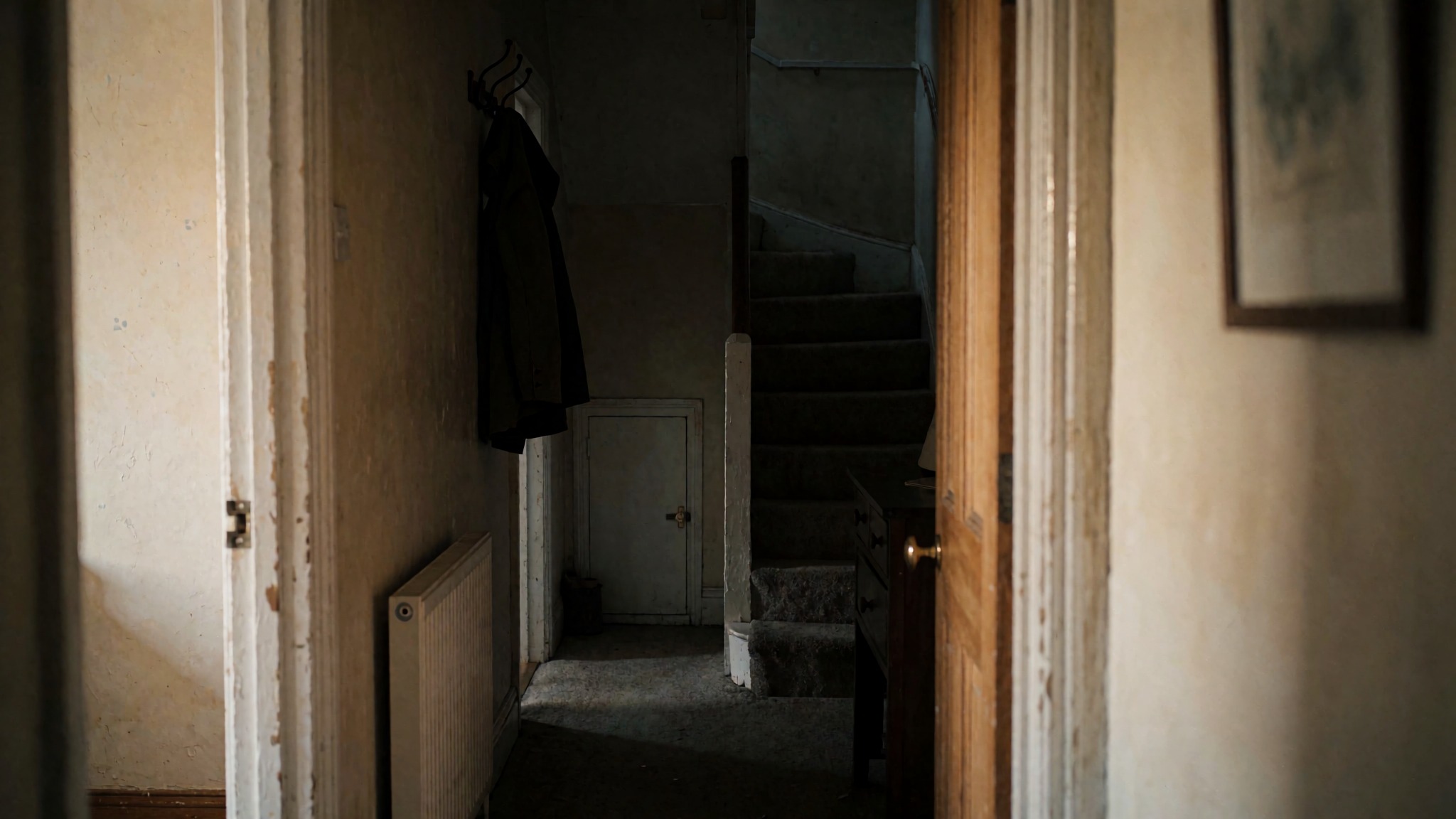
Right, so here’s what we know: nothing in your house changes when the clocks go back. The light does, and that’s doing most of the work. Every year, the week after the clocks go back, my inbox fills up. Same house people have lived in for years, same landing, same creak on the stairs, except suddenly it’s “something’s different” or “I don’t like being down here after six.” The building hasn’t moved. The hours have.
What actually changes when the clocks go back
It isn’t just that it gets dark earlier. It’s that it gets dark during the hours your body has spent months treating as daytime. You come home from work or the school run and the house is already in shadow by the time you’d normally be putting the kettle on. Your brain hasn’t caught up to the new schedule yet, so a dim hallway at half past five reads as “wrong” in a way it wouldn’t in July. That mismatch between what the clock says and what your eyes see is a genuinely odd feeling, and odd feelings go looking for an explanation. A ghost is one explanation. It isn’t the likeliest one.
Why an empty room sounds different in the dark
An empty room sounds different in the dark because your hearing starts doing the work your eyes usually do. Take someone into a familiar room and switch the main light off, and their ears start noticing sounds that were always there: the boiler cycling, the fridge compressor, a radiator contracting as the heating cools for the night. In daylight your eyes are doing most of the interpreting for you, so a sound gets filed and dismissed in a fraction of a second. In the dark, your ears have to do more of that work alone, with less information, and a mind working with less information tends to fill the gap with the worst-case guess. That’s not a flaw. It’s the same threat-detection wiring that kept people alive long before electric light existed. It just doesn’t know the difference between a real threat and a central heating system doing exactly what it’s built to do.
This is also where an isolated building changes the story completely. A detached farmhouse, an old pub after closing, a church hall on its own at the edge of a village: take away the hum of neighbours, traffic, other people moving about, and every remaining sound gets louder by comparison. I’ve stood in places where the quiet itself becomes the unsettling part, and the first odd noise after that quiet lands harder than it would on a normal street. Isolation doesn’t create a haunting. It turns the volume up on whatever was already there.
The cold spot people keep reporting
I get told about cold spots constantly this time of year, and I understand why: the heating’s not quite got the house up to speed yet, older buildings lose heat unevenly through single-glazed windows and draughty door frames, and a sudden drop as you walk from a heated room into a hallway feels dramatic when the whole house has got colder overall. On investigations I carry a small logger that tracks temperature and humidity through the night rather than relying on how a room feels to me at 2am, because “it felt freezing” and “it dropped suddenly” are two very different claims, and only one of them is evidence of anything. More often than not, the reading tells a boring, structural story: bad insulation, an open chimney flue, a gap under a door. That’s not me being dismissive of what someone felt. It’s just not the same thing as proof.
What I do differently once the evenings turn
I don’t change my method, but I do slow down more than usual before I write anything off, because I know my own senses are working with less information than they were in August, same as everyone else’s. Let the eyes adjust properly before deciding a shape is a shape. Check what’s actually making a noise before deciding it’s unexplained. Ask whether a report came in at 6pm in late October rather than 6pm in June, because that single fact changes how much weight the dark itself might be carrying.
None of this means every account from this time of year is nothing. It means the season isn’t neutral: darker evenings and the half-term run-up to Halloween put people in a state where they’re primed to notice, and primed to interpret what they notice a certain way. That’s not a criticism of anyone who’s messaged me feeling jumpy in their own hallway. It’s just the record, honestly read. The house is the same house it was in July. You’re just meeting it in the dark now.
More when I have it.